
A pest control estimate that lists “General Treatment: $1,800” and nothing else loses the job before the client finishes reading. A pest control quote template built for transparency wins it, often on the first call. That gap between vague pricing and itemized detail is where premium fumigation, heat, and termite jobs are either captured or surrendered to a competitor who took ten extra minutes to write a real estimate.
Most independent operators and small chain managers know they should itemize. But they default to quick lump sum quotes because writing detailed estimates from scratch every time feels unsustainable. It is not, once you have the right skeleton in place. This article gives you that skeleton, along with exact line item blocks, pre send checklists, and the language that defuses pricing objections before the customer has to ask.
Key Takeaways
- Itemized estimates reduce buyer friction on high ticket pest work by making the scope, treatment method, and warranty terms immediately obvious.
- Specific missing fields, especially treatment limitations and pre treatment conditions, erode trust on termite and bed bug proposals even when the price is competitive.
- A structured multi option quote format with ready to paste line items and a pre send compliance checklist creates consistency across technicians and speeds up approvals.
- Why an itemized pest control quote wins premium jobs
- Essential fields every pest control estimate must include
- Top 3 termite estimate details clients need but rarely see
- How to structure bed bug and termite treatment quotes
- Cost and tools to create a compliant pest estimate PDF
- Common objections caused by vague quotes and exact language to preempt them
- Two copy and paste line item blocks for your PDF
- How to measure and iterate: metrics and A/B tests for estimate conversion
- Pre send checklist and legal compliance quick checks
- Quick wins and next steps for operations
Why an itemized pest control quote wins premium jobs
A property owner facing a $2,400 bed bug heat treatment or a $3,800 termite tenting job is not price shopping the same way they would for a $99 quarterly spray. They are evaluating risk. A single number on an estimate form communicates nothing about preparation requirements, what happens if the treatment fails, or why the price is what it is.
Itemization solves this. When a customer sees labor hours, material quantities, preparation steps, and warranty terms broken into visible line items, the price stops being an abstract demand and becomes a sum they can trace. Research confirms what experienced salespeople already know: itemized and transparent pricing ranks as the top field that boosts client trust and approval, ahead of even warranty language and treatment method details. A pest control quote template that surfaces these line items makes the pricing, as one source puts it, “easy to understand, easier to approve.”
The competitive angle matters too. Most pest control businesses in the one to fifty tech range still email single line estimates or scribble numbers on a carbon form. Sending a structured PDF with visible breakdowns, even for a mid range job, positions your company as the organized, accountable option. That perception alone often eliminates the need to be the cheapest bid.

This does not mean every line needs microscopic detail. A rodent exclusion job does not need a rivet count on hardware cloth. But it does need enough specificity that the customer feels informed and protected. That distinction between enough detail and unnecessary clutter is what the rest of this article builds toward.
Essential fields every pest control estimate must include
A minimal but complete pest control quote template contains more than a price and a pest name. It contains the context that makes the price defensible and the agreement enforceable. When any of these fields are missing, the estimate creates openings for disputes, delayed approvals, and phone calls that waste a technician’s evening.
Begin with customer and property details. Full name, service address, contact phone, and email. If the property is multi unit, note the specific unit or zone being treated. This sounds obvious, but mismatched addresses cause more rescheduling than any pest biology ever will.
Next, pest type and inspected evidence. Instead of writing “ants,” write “Argentine ants, trails observed along kitchen baseboard and exterior foundation crack near hose bib.” This connects the price to something the client saw or the technician documented. It also justifies the treatment method that follows.
The treatment method section is where trust is built or broken. State whether the application is a liquid nonrepellent, a repellent barrier, a baiting program, a fumigant, or heat. For chemical treatments, reference the product name and EPA registration number. For nonchemical methods like heat or exclusion, describe the equipment and process. This field is one of the three that research identifies as most critical for client approval.
Labor and material line items come next. At minimum, split interior and exterior work. If the job includes exclusion materials like copper mesh or door sweeps, list them separately. This is where many free roofing estimate template approaches borrow a useful structure: separating prep labor from application labor and consumables, which roofers use to justify multi day quotes and pest operators can adopt for fumigation and heat jobs.
Prep requirements must be explicit. For bed bug treatments, list everything: laundry bagging, furniture pulling, aquarium covering. For termite fumigation, list food and medication removal, gas shutoff coordination, and pet relocation. Exclusions are equally important. If the quote does not cover drywall repair after a termite treatment or repainting after an exclusion job, state that plainly with exact language.
Warranty and guarantee terms need a dedicated field with duration, re treatment conditions, and exclusions stated as separate sublines. A customer who sees “90 day warranty” but not “re treatment only if conducive conditions corrected” has a different understanding than the technician does.
Service plan cadence matters for recurring work. State visit frequency, number of visits per year, and contract duration. Payment terms, including deposit amounts and due dates for progress payments on large fumigation jobs, should follow immediately.
Finally, signature and acceptance lines with date fields make the estimate a document that can convert to a service agreement without re entering data. This alone saves hours per week across a team of technicians.
Top 3 termite estimate details clients need but rarely see
Termite estimates carry higher stakes than general pest quotes. A $4,000 liquid treatment or a $6,000 fumigation is a capital expense for most homeowners, and the failure cost can reach tens of thousands in structural repair. Yet most termite proposals omit the three details that would most reassure a buyer making a decision under uncertainty.
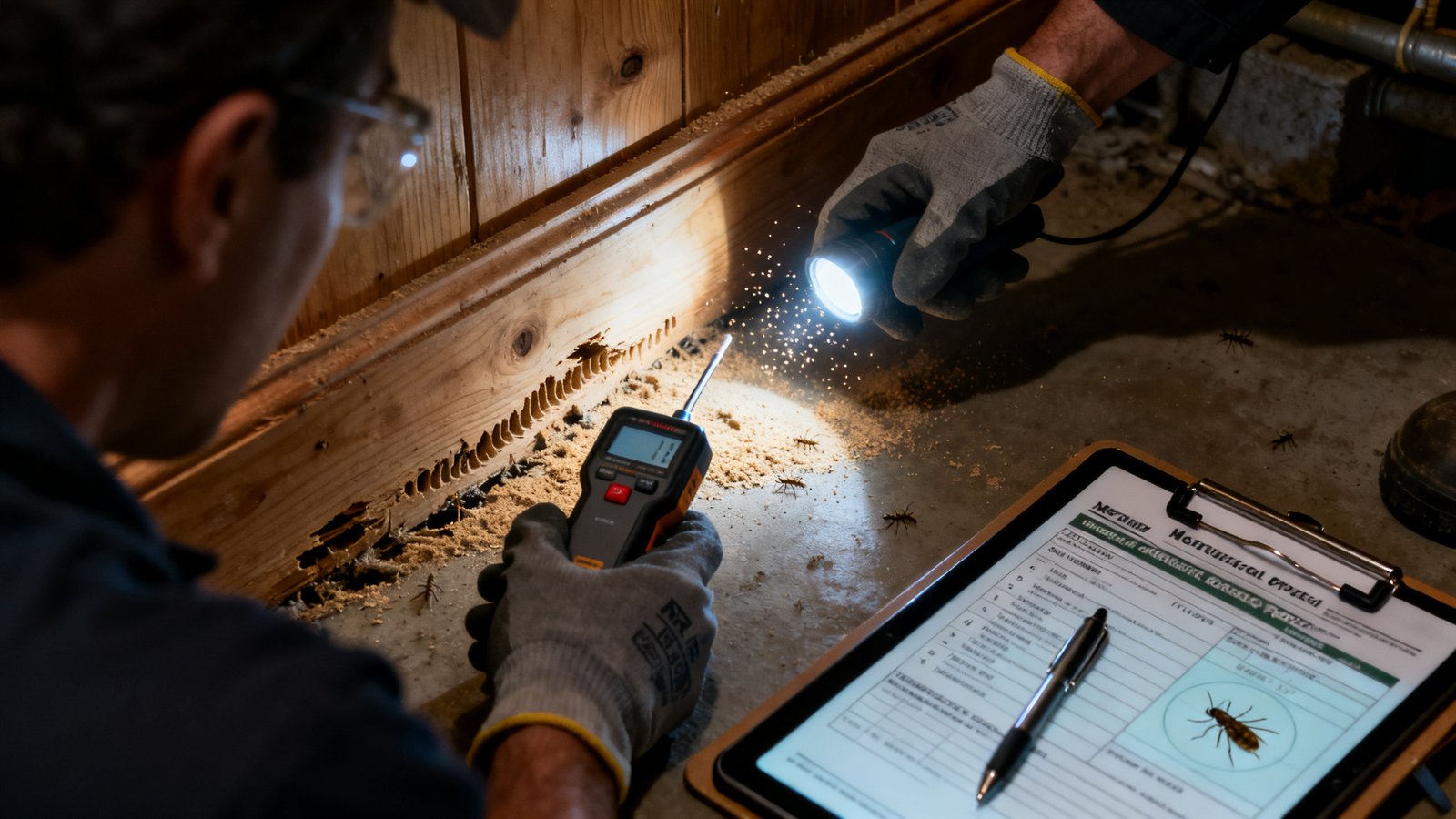
First, exact treatment method and its limitations. Research specifically calls out the failure to distinguish repellent from nonrepellent liquid applications. A repellent barrier pushes termites away from the structure but does nothing to the colony foraging elsewhere. A nonrepellent product like fipronil creates a treatment zone where termites contact the active ingredient and transfer it through the colony, achieving population suppression over weeks. These are fundamentally different outcomes with different warranty implications. Even fewer estimates mention species specific effectiveness. For example, some products labeled for Reticulitermes species in the eastern United States provide no structural protection against Coptotermes formosanus, the Formosan subterranean termite that colonizes at densities exceeding five million individuals per colony. If your market has both, the estimate must say which species the treatment addresses and which it does not.
Second, the true risk profile including potential repair costs. Most estimates present treatment as a preventative measure without quantifying what happens if the client declines. A subterranean termite colony of five million workers consumes roughly one pound of wood per day during peak activity. Over a six month period of inaction, the structural cost can exceed the treatment cost by a factor of three or more. Including even a brief risk statement, not as scare tactics but as factual context, changes how clients evaluate the proposal relative to the alternative of doing nothing.
Third, pre treatment site conditions to be addressed and ongoing inspection responsibilities. Wood to ground contact, leaky exterior faucets, and cellulose debris in crawlspaces all undermine termite treatments. If the estimate does not list these as conditions the client must correct before or shortly after treatment, the warranty becomes unenforceable and the treatment outcome suffers. Annual inspection requirements and bait station maintenance obligations, where applicable, should appear as a separate line in the service plan section.
Omitting these details saves a few minutes of writing and creates hours of post treatment conflict. Clients who understand what they are buying, what it cannot do, and what they must maintain are dramatically less likely to dispute charges or demand free re treatments when reinfestation occurs from uncorrected conducive conditions.
How to structure bed bug and termite treatment quotes
High ticket treatments become easier to sell when the estimate offers multi option pricing rather than a single take it or leave it number. A three tier good, better, best structure works particularly well for bed bug and termite work because it frames the recommended option against visible alternatives.
For bed bug treatments, structure the quote around method intensity. The “good” tier might be a targeted chemical application to confirmed rooms with a 30 day warranty. The “better” tier adds a full unit inspection, mattress encasements, and two chemical visits 14 days apart with a 60 day warranty. The “best” tier is whole unit heat treatment with a chemical perimeter, prep labor included, and a 90 day warranty. Each tier should show room level pricing so clients in multi bedroom units can scale the option to their budget without requiring a new estimate. Prep checklists for each tier should appear as an appendix page in the PDF, not as a separate document the client might lose.
For termite work, structure around treatment type and coverage scope. The “good” tier is a localized liquid treatment around active infestation with a one year warranty and no structural damage repair coverage. The “better” tier is a full perimeter nonrepellent liquid treatment with a five year renewable warranty and annual inspections included. The “best” tier is whole structure fumigation with a seven year warranty, post fumigation aeration clearance certification, and a monitoring schedule. Baiting system options can sit alongside liquid treatments or replace them entirely depending on property type and client preference for minimal disruption versus faster colony elimination.
Visible warranty language in each tier heading is non negotiable. A tier labeled “Heat Treatment with 90 Day Guarantee” communicates value before the client reads a single line item. Conversely, if a tier excludes something important like drywall repair or furniture disposal, that exclusion should appear in the estimate body, not buried in fine print after the signature block.
For both treatment types, structural repair disclaimers belong in their own bolded section. No pest control company wants to pay for water damage restoration discovered during a termite inspection or for patching plaster cracks after a heat treatment. Stating what the price does not cover is as important as stating what it does.
Operators who also run HVAC estimate template style multi option proposals for system replacements will recognize this format immediately. It scales across trade types and works because it respects the client’s need to compare options on their own terms.
Cost and tools to create a compliant pest estimate PDF
The sources reviewed do not list a standalone dollar cost for generating a compliant pest estimate PDF. This is because the PDF itself is a product of broader estimating software subscriptions or template purchases, not a discrete line item expense. The effective cost of producing one estimate is negligible when spread across a monthly subscription.
The practical question is which tool to use. Dedicated pest control platforms like Housecall Pro, PestPac, and GorillaDesk generate estimates with field specific templates that include EPA label reference fields, treatment method picklists, and warranty term options. These platforms can track estimate open rates and conversion, which matters when you start measuring what itemization actually does for close rates.
For operators not ready to commit to industry specific software, a professional PDF template built for pest control and exported from a generic tool is a viable starting point. The same platform that offers a cleaning quote template or handyman estimate template can produce a pest specific version with the right fields and branding. The key compliance steps remain the same regardless of the tool: ensure your license number appears on every page, reference EPA product labels by name and registration number, note any state specific post treatment reentry intervals, and retain a copy of every signed estimate for the duration required by your state’s pesticide recordkeeping regulations, which typically ranges from two to seven years.
A note on recordkeeping: compliant pest estimate PDFs are discoverable in disputes and regulatory audits. Do not treat them as throwaway sales documents. They are legal records that establish what you promised, what you disclosed, and what the client agreed to.
Common objections caused by vague quotes and exact language to preempt them
Vague estimates generate predictable objections. Each objection can be preempted with specific language written into the template before the client sees it. The exact phrasing matters because it shifts the burden of clarification from a defensive phone conversation to a proactive document the client can read at their pace.
Objection one: unclear scope. A quote that says “Termite Treatment” generates the question “What exactly are you doing for that price?” The fix is to include language directly under the treatment method line. Example phrasing: “This price includes a full perimeter liquid nonrepellent treatment of the foundation exterior, interior spot treatment of active gallery areas in the crawlspace, and one follow up inspection at 90 days. This price excludes structural repairs, drywall replacement, and treatment of detached structures unless separately quoted.”
Objection two: surprise add ons. Clients fear the quoted price is a teaser rate that will double once work begins. Preempt with a line in the exclusions and additions section. Example phrasing: “Any pest activity discovered during treatment that falls outside the scope listed above will be quoted as a separate service before additional work begins. No additional charges will be incurred without your written approval.”
Objection three: uncertain warranties. When the warranty section is blank or says only “guaranteed,” the client assumes the guarantee is worthless because it comes with no terms. Fill it with specific commitments and boundaries. Example phrasing: “Warranty covers re treatment of the treated areas for subterranean termite activity within 365 days of initial application at no additional charge, provided that conducive conditions identified in this estimate have been corrected by the property owner and annual inspections are maintained. This warranty does not cover damage to the structure that existed prior to the initial treatment date.”
Objection four: comparison to a cheaper competitor. When a client says another company quoted half the price, the itemized estimate should already contain the basis for differentiation. Example phrasing in the treatment method field: “Unlike single application repellent treatments that create a chemical barrier without colony elimination, this nonrepellent treatment targets colony reduction over a 60 to 90 day period. The extended warranty period reflects this difference in treatment mechanism.”
None of this language needs to be written fresh for every estimate. It belongs in the pest control bid form template as default text that can be edited per job but never left blank. A free electrical estimate template follows the same logic by preloading NEC compliance disclaimers into every quote so estimators never forget them in the field.
Two copy and paste line item blocks for your PDF
Below are two ready to use line item blocks. One covers interior treatment work typical for bed bugs, roaches, and stored product pests. The other covers exterior and structural work for termite treatments. Both are built around the fields research confirms most boost client trust: itemized transparent pricing and treatment method scope details.
| Line Item | Method Description | Unit | Qty | Unit Price | Subtotal |
|---|---|---|---|---|---|
| Interior Inspection and Prep | Full unit inspection, furniture repositioning, outlet plate removal, clutter reduction guidance provided to occupant | Flat | 1 | $175.00 | $175.00 |
| Chemical Application, Interior Rooms | Targeted application of EPA Reg. No. XXXX-XXX to baseboards, cracks, crevices, and void spaces in confirmed activity rooms; nonrepellent transfer insecticide for colony reduction | Room | 4 | $185.00 | $740.00 |
| Mattress and Box Spring Encasement | Installation of bed bug certified encasements on all sleeping surfaces in treated rooms | Each | 2 | $65.00 | $130.00 |
| Follow Up Inspection | Visual inspection and monitoring device check at 14 days post treatment; re treatment decision made at this visit | Visit | 1 | $95.00 | $95.00 |
| Interior Treatment Total | $1,140.00 | ||||
Warranty (paste into warranty field): “This interior treatment is warranted against bed bug activity in treated rooms for 60 days from initial application date. Re treatments within warranty period are provided at no charge provided prep instructions were followed and no new infested items were introduced to the treated space. Warranty does not cover rooms not listed in the scope above.”
Prep Instructions (paste into prep field): “Before treatment day: wash and dry all bedding and clothing from treated rooms on high heat. Bag sealed items and leave in treated rooms. Move furniture at least 18 inches from walls. Remove all items from under beds. Cover fish tanks with plastic and turn off air pumps. Vacate unit for 4 hours post treatment.”
| Line Item | Method Description | Unit | Qty | Unit Price | Subtotal |
|---|---|---|---|---|---|
| Full Perimeter Liquid Treatment | Trench and treat application of nonrepellent termiticide EPA Reg. No. XXXX-XXX to foundation perimeter; rodding at 12 inch intervals to footing depth | Linear Ft | 180 | $12.50 | $2,250.00 |
| Crawlspace Spot Treatment | Localized application to active termite galleries and shelter tubes identified during inspection; includes removal of accessible tubes | Flat | 1 | $450.00 | $450.00 |
| Conducive Condition Report | Written report of wood to ground contact, moisture issues, and cellulose debris requiring correction; provided with photos and recommended action timeline | Flat | 1 | $0.00 | $0.00 |
| Annual Inspection, Year 1 to 5 | Annual visual inspection and monitoring program included in treatment package; priced per year | Year | 1 | $195.00 | $195.00 |
| Exterior Termite Treatment Total | $2,895.00 | ||||
Warranty (paste into warranty field): “This treatment is warranted against subterranean termite activity in the treated structure for 5 years from initial application date, renewable annually with maintained inspections. Re treatment within warranty period is provided at no charge for active termite activity in treated zones, provided conducive conditions identified in the attached report are corrected within 90 days. This warranty does not cover structural damage repair, Formosan termite activity unless separately specified, or termite activity originating from untreated detached structures.”
Prep Instructions (paste into prep field): “Before treatment day: clear access to foundation perimeter by removing stored items within 3 feet of exterior walls. Ensure crawlspace access is unlocked and unobstructed. Relocate pets during application and for 2 hours post treatment or until treated soil is dry to the touch. Do not disturb treated soil for 24 hours.”
How to measure and iterate: metrics and A/B tests for estimate conversion
The sources do not provide a universal conversion lift percentage for itemized pest estimates because no single study across all markets and ticket sizes has isolated that variable. This means your local data is the only data that matters. Measuring it requires a deliberate process rather than a passive hope.
Start by tracking four metrics per estimate: open rate from your PDF delivery platform, time to acceptance measured from send time to signed return, close rate as signed estimates divided by total estimates sent, and reasons for rejection collected during follow up calls with prospects who declined. Most pest specific estimating software captures the first three automatically. A simple spreadsheet column for “rejection reason” covering the last metric is enough to start.
A structured A/B test can isolate the effect of itemization. Run a two week test on ten consecutive high ticket leads, dividing them evenly into two groups. Group A receives a one line lump sum estimate with a total and a warranty sentence. Group B receives the full itemized pest control proposal with line items, method descriptions, prep instructions, and tiered options. Track close rate and time to acceptance for each group. The sample size is small, but if Group B closes two more jobs than Group A on the same lead volume, that is enough signal to justify rolling out itemized templates company wide. Then expand the test with a third variant that adds a photo of the inspected evidence to the line items and see if close rate shifts again.
Iterate based on what the rejection reasons tell you. If prospects say the estimate was too expensive but did not mention confusion about scope, the price point or the tier structure needs adjustment, not the detail level. If prospects say they did not understand what was included, the itemization is insufficiently clear. The goal is not maximum detail but maximum decision confidence for the client.
Pre send checklist and legal compliance quick checks
Every estimate should pass a final review before it leaves your outbox. Research identifies warranty and treatment method details as the two highest trust driving fields, so those deserve particular scrutiny in the checklist.
Verify that your company license number appears on every page, not just the header of page one. State pesticide applicator certification numbers should appear alongside the technician name if your state requires it. Confirm the insurance statement is current and includes the coverage amounts relevant to the treatment type.
Check EPA product labels and registration numbers. Every chemical product listed in the estimate should include its EPA registration number, and the treatment method description should not make efficacy claims beyond what the label supports. For fumigation estimates, confirm that the aeration clearance protocol is stated and that reentry intervals match the label and any state specific requirements that may be stricter than the federal label.
Review client prep instructions for completeness. If the bed bug prep list does not mention fish tanks, or the termite prep list does not mention clearing foundation access, add those now. These omissions are the most common source of delayed treatments and warranty disputes.
Warranty language must match the treatment method. A nonrepellent treatment with a five year warranty needs to state the annual inspection condition explicitly. A heat treatment with a 90 day warranty needs to exclude reintroduction risk if the client brings in used furniture after treatment.
Cancellation and refund policy should appear once, clearly, and in the same location on every estimate so no client can claim it was hidden. Typical language includes a deposit forfeiture for cancellations within 48 hours of the scheduled treatment date and a full refund of deposits for cancellations made earlier.
Signatures need a date field next to them. An undated signature creates ambiguity about which version of the estimate the client approved if terms were revised during negotiation.
File naming matters more than it seems. A consistent convention like “YYYYMMDD_ClientLastName_PestType_EstimateRev1.pdf” makes retrieval fast when a client calls six months later with a warranty claim. This simple discipline prevents the sinking feeling of scrolling through a camera roll or a downloads folder searching for a file named “estimate_final_v3.pdf.”
Quick wins and next steps for operations
Adopting a standardized pest control quote template across a team requires a phased rollout rather than an overnight mandate. Technicians who have written estimates a certain way for years will resist if the new process feels like extra paperwork without visible benefit. A 30, 60, and 90 day plan solves this by proving results before demanding universal compliance.
Days 1 through 14: select or build your template. Use the fields and line item blocks from this article as a starting structure. Export it as a branded PDF with your logo, license number, and default warranty language. Load it into whichever estimating tool you currently use, whether that is a dedicated platform like PestPac or a general tool that generates a pest control estimate form PDF. Train one person, ideally an operations manager or lead technician, to use it fluently before anyone else touches it.
Days 15 through 30: pilot the template on ten high ticket leads. Bed bug, termite, and fumigation jobs are the right test cases because the stakes are high enough that itemization should matter most. Have the pilot user send the itemized template and track the four metrics: open rate, time to acceptance, close rate, and rejection reasons. Compare to the previous ten comparable leads sent as lump sum estimates.
Days 31 through 60: analyze the comparison data. If close rate improved by even one or two jobs, that pays for the entire implementation effort on high ticket work. Share the results with the full technician team. If no improvement occurred, examine the rejection reasons to understand why. It may be that the template needs tier adjustments or that the local market responds to a different detail level.
Days 61 through 90: roll out company wide. Provide every technician with a script for explaining line items on site. A sample script: “I am going to send you a detailed estimate that shows exactly what we will do, what each part costs, and what the warranty covers. That way you can compare it against any other quotes with confidence. If anything is unclear, call me directly.” This script positions the itemization as a service to the client, not as a bureaucratic requirement.
The long term habit to build is a quarterly review of estimate performance. Spend 30 minutes every three months looking at close rates, rejection reasons, and any new treatment methods or products that need to be added to the template. A pest control proposal that stays static while your service offerings evolve gradually becomes the same vague document you set out to replace.
Conclusion
A pest control estimate is not just a price notification. It is the most important trust document your company sends to a prospective client who is anxious about cost, skeptical about efficacy, and uncertain about what happens if the treatment fails. An itemized, transparent pest control quote template answers those anxieties before the client has to voice them as objections. It shortens the time between sending the estimate and receiving a signed acceptance. It reduces the post treatment calls that drain technician time and erode margin.
The templates, line item blocks, checklist, and rollout plan in this article are built to be used, not just read. Pick one section and implement it this week. If nothing else, add the three missing termite estimate details to your current proposal format and watch how client questions change. Send the first ten itemized estimates. Measure the difference. Then expand.
Frequently Asked Questions
Does itemizing pest control estimates actually increase close rates?
Research indicates itemized estimates make pricing easier to understand and approve, but no universal percentage lift is available across all markets. The impact depends on your ticket size, competition, and client demographics. The only way to know is to track your own close rates before and after switching to an itemized format. A simple two week A/B test on ten comparable leads provides enough signal to decide whether to adopt the format permanently.
What is the single most important field to include in a pest estimate?
Treatment method and scope details rank among the top trust driving fields alongside itemized pricing and warranty terms. If you can only improve one thing immediately, replace a generic treatment name like “Termite Treatment” with a specific description of the application method, the product type, its mechanism of action, and exactly which areas are covered.
How do I handle clients who say a competitor quoted half the price?
An itemized estimate gives you the tools to respond without sounding defensive. Point to specific line items the competitor’s quote likely omitted, such as annual inspections, re treatment warranty terms, or the distinction between repellent and nonrepellent chemistry. If the competitor’s quote is genuinely comparable and lower, the market is telling you something about your pricing structure that itemization makes visible.
Do I need pest control specific software to create compliant estimates?
Dedicated platforms like Housecall Pro, PestPac, and GorillaDesk include pest specific fields and compliance prompts that generic tools do not. However, a professional PDF template with the right fields and careful manual review can produce a compliant estimate without industry specific software. The key is ensuring EPA label references, license numbers, and warranty language are present and accurate on every estimate sent.
How long should I keep copies of signed pest control estimates?
Retention requirements vary by state but typically range from two to seven years for pesticide application records. Since a signed estimate can serve as part of your treatment record, treat it as a legal document and retain it for at least the duration required by your state’s lead pesticide regulatory agency. Digital storage with property level organization makes retrieval practical even across long retention periods.