
Most plumbers lose high ticket jobs before they ever get to explain their value. The culprit is almost always the same: a sloppy estimate that looks like it was scratched on a napkin. A plumbing estimate template free of hidden costs and vague line items is the fastest way to turn a skeptical homeowner into a signed contract, especially on emergency water heater replacements and whole house repiping jobs where the stakes and the invoice are both high.
Key Takeaways
- Itemized estimates build enough trust to overcome sticker shock on jobs exceeding $3,000 because customers see exactly what they are paying for.
- Permit fees, disposal charges, and travel time are the three line items most free templates omit and the three things customers later resent paying as surprise add ons.
- A single template delivered as an editable Word doc, a fillable PDF, and a clean printable bid form covers every customer preference from text message approval to formal kitchen table signing.
- Why Professional Itemized Plumbing Estimates Win High Ticket Jobs
- What To Include On Every Plumbing Estimate
- Template Formats And Pricing Models That Close More Jobs
- Common Customer Complaints And How Your Template Fixes Them
- Sales And Operations Playbook For Emergency Calls
- Deliverables And How To Present The Download
- Conclusion
- Frequently Asked Questions
Why Professional Itemized Plumbing Estimates Win High Ticket Jobs
When a homeowner sees a water heater replacement quote for $4,200 with nothing but a single number and the word “install,” their brain does exactly what yours would: it starts hunting for a cheaper number. An itemized plumbing estimate template free of ambiguity stops that hunt cold.

Itemized quotes build trust through transparency. When a customer sees the water heater unit cost, the expansion tank, the labor hours, the permit fee, and the disposal charge each on their own line, the total feels justified rather than arbitrary. According to industry guidance, refusal to provide a written itemized estimate is described as “the biggest warning sign” a customer can encounter. That means the simple act of handing over a detailed breakdown already separates you from the competitors who are still scribbling numbers on carbon paper.
This matters most on high ticket jobs. A repiping bid can easily land between $6,000 and $15,000. At that price point, the customer is not just buying pipe. They are buying confidence that you are not padding the number. They want to compare quotes apples to apples. If your competitor hands them three pages of organized line items and you hand them a single number on a generic PDF estimate form with no breakdown, you lose. Not on price. On presentation.
Leading with a clear total is smart. But supporting that total with a detailed breakdown directly underneath is smarter. It signals that you have nothing to hide. That matters in an industry where homeowners have been trained to expect surprises.
What To Include On Every Plumbing Estimate
A plumber quote template PDF that actually protects your margin needs more than a parts list and a labor guess. It needs line items that account for the real costs of showing up, doing the work, and leaving the site clean and code compliant.
Mandatory Line Items For Every Plumbing Contractor Estimate
Every plumbing contractor estimate should include these line items as separate, clearly labeled entries:
- Parts with SKU or description: Do not write “pipe.” Write “Type L copper, 3/4 inch, 10 foot lengths” or include the supplier SKU. This makes price comparison legitimate and protects you when the customer Googles the part and finds a retail price.
- Labor: Show either hours multiplied by rate or a flat task price. Both work. What does not work is burying labor inside a lump sum.
- Fixtures: Water heaters, faucets, toilets, tubs. Each gets its own line with make and model.
- Permit fees: Separate line. Always. More on this below.
- Disposal: Hauling away the old water heater or ripped out cast iron is real work with real costs. Bill it.
- Travel or trip charge: If you charge a dispatch fee, show it. If you build travel into your labor rate, note that in the terms.
- Tax: Calculated and displayed clearly.
- Contingency percentage: A small buffer (typically 5 to 10 percent on larger renovations) that covers unexpected issues behind walls or under slabs.
- Warranty terms: What is covered, for how long, and what voids it.
- Payment terms and authorization signature block: This turns your estimate into a contract once signed.
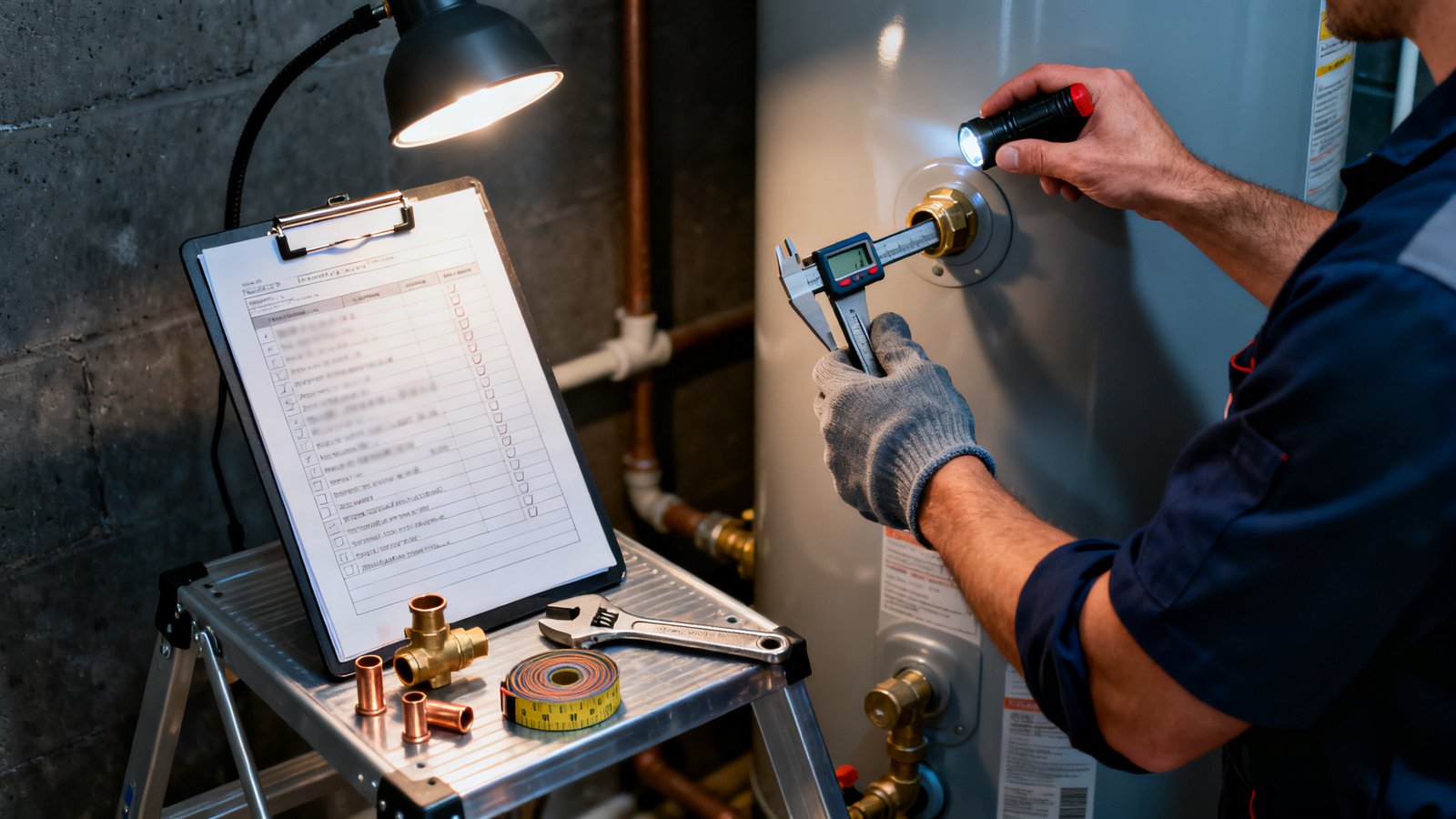
The Hidden Line Item Free Templates Miss Most: Permit Fees
Free templates found online almost never include a dedicated permit line. They leave it to you to remember. And when you forget, you either eat the cost or go back to the customer with your hand out. Neither option builds trust.
Permit fees are repeatedly highlighted as a cost that may not appear in a basic quote. The research explicitly lists permit fees, disposal of old materials, and travel time charges as hidden costs customers should ask about. That means customers are already being educated to look for these line items. If yours are missing, you look evasive even if the omission was accidental.
Disposal is another frequent miss. A 50 gallon water heater weighs about 150 pounds empty and needs to be drained, disconnected, and hauled to a recycling facility or dump. That takes time and possibly a disposal fee at the facility. A plumbing bid form that includes “removal and disposal of existing unit” as a line item recovers that cost cleanly.
Travel charges matter too. If your shop is 40 minutes from the job site, that is 80 minutes of unbillable windshield time round trip. Whether you charge it as a flat trip fee or build it into your first hour of labor, show it.
Template Formats And Pricing Models That Close More Jobs
Three Formats Every Plumber Should Offer
A single format does not fit every sales situation. You need three versions of your plumber quote template PDF ready to go:
Editable Word or Excel template: Best for the office. You can quickly modify quantities, swap out fixture models, and adjust markup before converting to PDF. This is your master working file.
Fillable PDF for onsite signing: This is the game changer for emergency calls. You fill in the fields on a tablet or laptop in the customer’s kitchen, they sign digitally, and you email them a copy before you walk out the door. No printer needed. No “I will send it later” delays that give them time to call two more plumbers.
Clean one page printable bid form: Some customers still want paper. A well designed single page plumbing bid form with your logo, all line items, totals, and a signature block works for the traditional face to face close. Keep it to one page. Two pages feel like a contract. One page feels like an agreement.
All three formats should share the same underlying structure: instant totals, automatic tax calculation, clear warranty and payment terms, a digital or physical signature field, and optional line item notes where you can explain what a specific part does.
Flat Rate Versus Itemized: When To Use Each
Flat rate pricing works beautifully for straightforward emergency calls. A kitchen sink drain clog on a Saturday night does not need a five line breakdown. The customer wants a price, wants it fixed, and wants you gone. A single line summary price for the job, backed by a verbal explanation of what it covers, closes fast.
But on mid to high ticket jobs, fully itemized bids win. A pipe repair estimate or repiping quote that shows material costs, labor phases, and permit fees defends your margin when the homeowner inevitably compares your number to a competitor. If that competitor’s quote is vague and yours is transparent, you win even if your price is higher.
The best approach combines both. Present a clean one line summary total at the top, then include a collapsible or attached itemized breakdown underneath. The customer sees the number they care about immediately, but the proof is right there if they want to dig in. Most will not. But they will trust you because you offered.
Regarding markup, many contractors operate in a general range of 20 to 50 percent depending on job type and overhead. Document your markup methodology. If you use a flat 30 percent on materials and a separate labor rate, note that in your template’s fine print. Transparency here prevents the awkward conversation when a customer finds your supplier’s price online.
Handling Permit Cost Variability
Permit fees are not uniform. A water heater permit in one municipality might cost $75. In the next town over, with an inspection fee and a separate application charge, it might be $250. Your plumbing contractor estimate needs to handle this variability without looking like you are guessing.
For jobs in familiar jurisdictions, list the exact permit fee as a separate line item. For jobs in unfamiliar areas or for complex projects where the permit scope is uncertain, use a “Permit Fee TBD” placeholder with an estimated range and a brief contingency clause. Something like: “Permit fees estimated at $100 to $250 based on local requirements. Final permit cost will be documented with receipt from issuing authority.”
Always check the local jurisdiction’s current fee schedule before finalizing. A five minute phone call to the building department saves you from eating a $150 difference on a permit you underquoted.
Common Customer Complaints And How Your Template Fixes Them
Customers have been burned. They have read the articles. They know the red flags. Your estimate template should systematically eliminate every single one of them.
The Top Three Complaints And Your Template’s Built In Fixes
Complaint 1: Refusal to provide a written, itemized estimate. This is described as “the biggest warning sign” by consumer facing plumbing resources. Your template is, by definition, a written itemized estimate. Handing it over without being asked immediately signals you are not the contractor they need to worry about.
Complaint 2: Cash only payment demands. Your template includes accepted payment methods in the terms section. List credit cards, checks, ACH transfers, and financing options if you offer them. Seeing “Visa, Mastercard, Amex accepted” in writing kills the fear that you are operating off the books.
Complaint 3: High pressure tactics or bids significantly lower than competitors. Your template includes an “Estimate Valid Until” date instead of a “Sign Now Or Lose This Price” ultimatum. It also includes a cooling off period or at minimum a note that the customer is encouraged to compare bids. This reverse psychology works. Telling a customer to get other quotes, paired with an estimate so detailed it makes competitors look vague, brings them right back to you.
Sample Annotated Estimate: Water Heater Replacement
Here is what a real water heater replacement quote looks like with proper line item structure:
| Line Item | Qty | Unit Price | Total |
|---|---|---|---|
| 50 Gallon Power Vent Water Heater (Rheem PROG50) | 1 | $1,895.00 | $1,895.00 |
| Expansion Tank (2.1 Gallon) | 1 | $85.00 | $85.00 |
| Venting Materials And Fittings | 1 | $120.00 | $120.00 |
| Labor: Removal And Installation (4 Hours At $145/hr) | 4 | $145.00 | $580.00 |
| Permit Fee (City Of [Name]) | 1 | $125.00 | $125.00 |
| Disposal Of Old Water Heater | 1 | $75.00 | $75.00 |
| Travel Charge | 1 | $45.00 | $45.00 |
| Subtotal | $2,925.00 | ||
| Tax (8.25%) | $241.31 | ||
| Total | $3,166.31 | ||
Terms: 50% deposit due at contract signing. Balance due upon completion and passing inspection. Warranty: 6 years on tank, 2 years on labor. Estimate valid for 14 days.
This level of detail lets a customer compare your quote to another plumber’s quote line by line. If the other guy is cheaper on the water heater unit but omitted the permit and disposal, the customer can see exactly where the difference comes from. That is how you defend a higher price without saying a word.
Sample Annotated Estimate: Whole House Repiping
A repiping bid is a different animal. Breaking it into zones and phases makes a $12,000 quote feel manageable and logical:
| Phase / Zone | Scope | Materials | Labor | Line Total |
|---|---|---|---|---|
| Zone 1: Main Supply Line | 1 inch Type L copper from meter to manifold, 40 linear feet | $680.00 | $920.00 | $1,600.00 |
| Zone 2: Bathroom Group | Hot and cold branches to 2 full baths, PEX uponor system | $1,240.00 | $1,860.00 | $3,100.00 |
| Zone 3: Kitchen And Laundry | Hot and cold branches to kitchen sink, dishwasher, laundry | $890.00 | $1,340.00 | $2,230.00 |
| Permits And Inspections | Rough in and final inspection, city of [Name] | $350.00 | ||
| Disposal And Site Cleanup | Removal of all demo pipe, daily cleanup, final haul away | $400.00 | ||
| Contingency (7%) | Unforeseen conditions behind walls or under slab | $537.60 | ||
| Grand Total | $8,217.60 | |||
Breaking a repipe into zones shows the customer you have actually thought through the job. It also limits scope disputes. If they later ask you to add a hose bib that was not in the original zones, it is clearly a change order, not something you “forgot.”
Sales And Operations Playbook For Emergency Calls
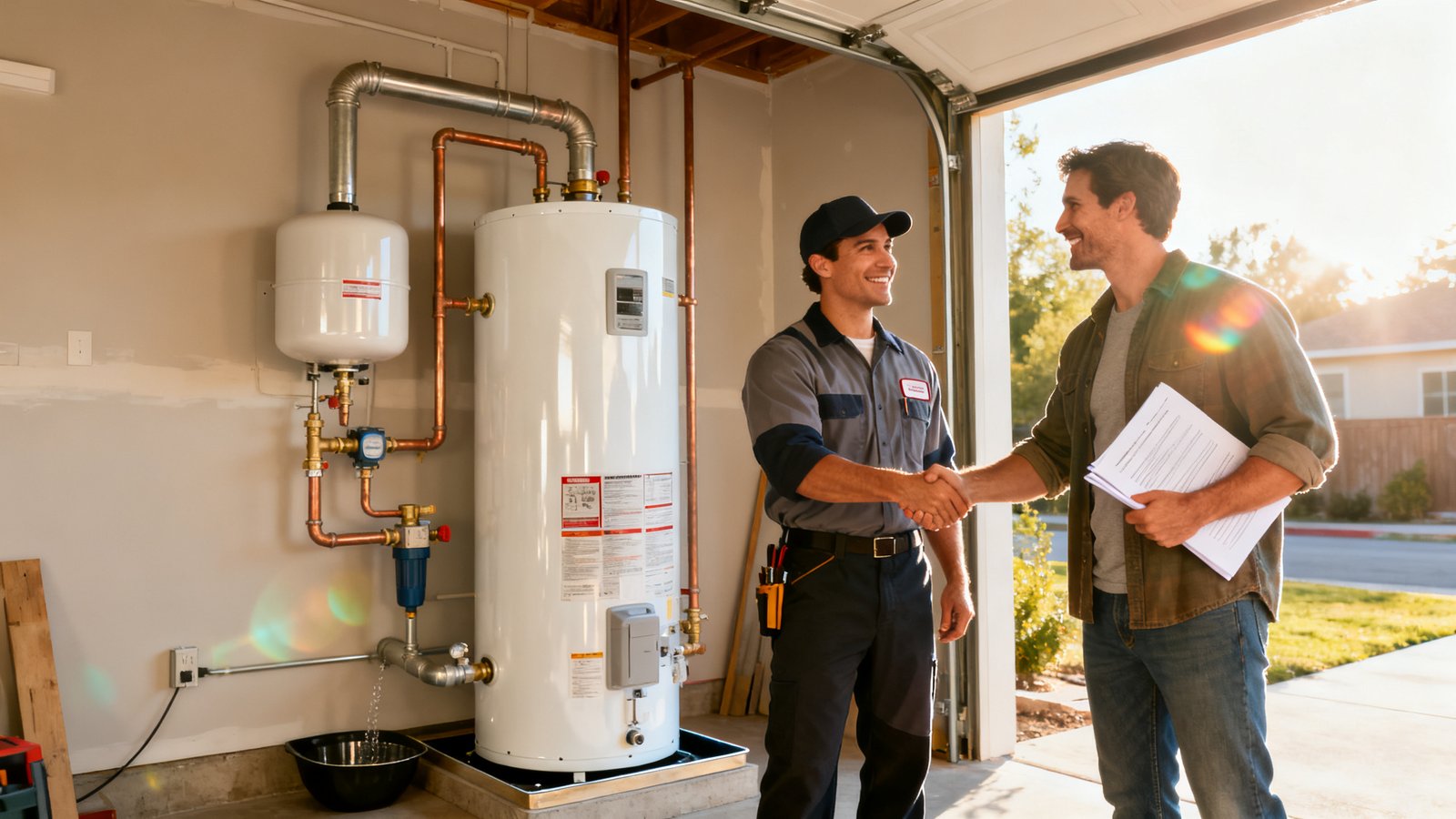
Emergency plumbing calls reward speed. A homeowner with a flooded basement at 9 PM is not shopping for five quotes. They want one plumber who shows up fast, fixes the problem, and charges a fair price they can understand.
Here is the workflow for same day emergency estimate delivery:
Step 1: On site diagnosis and quick quote. Arrive, assess, and open your fillable plumber quote template PDF on your tablet. Fill in the obvious items: labor estimate, major parts, trip charge. For anything uncertain, use a “TBD” placeholder with a reasonable high end estimate. Hand the tablet to the customer or email the PDF on the spot.
Step 2: Get a signature before you start work. A plumbing work order template with a digital signature field lets the customer authorize the estimate range right there. This protects you from the “I never approved that” conversation later.
Step 3: Follow up with the fully itemized bid within 24 hours. If any TBD items need firming up, send the completed version by email within a day. This follow up reinforces professionalism and gives the customer a document they can submit to their insurance company if needed.
Scripting for permit and contingency lines: When presenting an estimate that includes permit fees, say this: “The permit line covers the city fee and the inspection. It ensures the work is documented and legal, which protects your home value when you sell. I do not skip permits and I do not bury the cost in the labor line.”
Homeowners respect this. They have heard stories about unpermitted work causing problems at resale. Framing the permit as protection rather than a fee changes the conversation.
Deliverables And How To Present The Download
When you package your plumbing estimate template free for download or internal use, include these files:
- Editable Word or Excel estimate template: The master working file with your branding, preloaded line item categories, and automatic tax calculation. Users customize markup percentages and add their local permit fee defaults.
- Fillable PDF quote form: Ready for tablet or laptop use on job sites. Digital signature field included.
- Printable one page bid form: Clean, logo forward, optimized for kitchen table signing.
- Sample annotated water heater replacement estimate: A filled in example that shows new users exactly how line items should look.
- Sample annotated repiping estimate: Demonstrates zone breakdowns and contingency handling.
- Quick start implementation guide: A one page PDF showing how to customize markup percentages, update local permit placeholders, and swap out fixture pricing.
If you are creating a download page for these templates, the call to action should be direct and benefit focused. Something like: “Download the free plumbing estimate template pack. Includes editable Word, fillable PDF, and printable bid form. Start closing more high ticket jobs today.”
For plumbers who also handle related trades, consider exploring similar template packs. A well structured HVAC estimate template follows the same line item logic for furnace and AC replacements. The electrical estimate template handles panel upgrades with NEC compliance notes built in. And if you do smaller general repairs, the handyman estimate template uses the same professional structure scaled for smaller jobs. Each template category follows the same principle: transparency wins trust, and trust wins jobs.
Legal snippets to include in your template footer or terms section:
- Permit responsibility: “Permit fees listed are based on current [City/County] fee schedules. Final permit costs are passed through at actual cost with receipt documentation provided.”
- Change orders: “Any work outside the scope described above requires a written change order signed by both parties before additional work begins.”
- Payment schedule: “50% deposit due at contract signing. 50% balance due upon substantial completion and passing final inspection.” Adjust percentages to fit your cash flow needs.
- Warranty: “[Company Name] warrants workmanship for [X] years from date of completion. Manufacturer warranties on fixtures and equipment apply separately and are passed through to the customer.”
- Unforeseen conditions: “If concealed conditions are discovered during work (rot, mold, code violations, deteriorated pipes), [Company Name] will stop work and provide a written change order before proceeding.”
These clauses are not legal advice. Have a local attorney review them for compliance with your state’s contractor laws. But they give you a starting point that covers the most common dispute triggers.
Conclusion
A plumbing estimate template free of hidden costs, vague language, and missing line items is not just a piece of paper. It is a sales tool that communicates competence before you ever say a word about your experience or certifications. When a homeowner holds your itemized estimate next to a competitor’s single number on a blank form, they will choose yours even if it costs more. Because they can see what they are paying for.
Itemize permits. Show disposal charges. Break labor into visible units. Offer multiple formats so the customer can sign however they prefer. Address the common complaints before the customer even thinks to raise them. These are not complicated changes. They are simple structural decisions baked into a template that you use on every single job.
Download the template pack, customize it with your branding and local permit defaults, and start handing out estimates that close. Your margin will thank you. Your customers will too.
Ready to upgrade your estimating process? Create a professional PDF estimate in minutes with our free online generator built specifically for trades and service businesses. No account needed. Just fill in your details and download a branded estimate instantly.
Frequently Asked Questions
What is the most important line item that free plumbing estimate templates miss?
Permit fees are the most commonly omitted line item. Free templates rarely include a dedicated permit line, leaving plumbers to either absorb the cost or awkwardly request additional payment later. Disposal charges and travel time are also frequently missing and should be included as separate line items in any professional template.
Should I use flat rate or itemized pricing on my plumbing estimates?
Use flat rate pricing for straightforward emergency calls where speed matters and the scope is clear. Use fully itemized estimates for mid to high ticket jobs like water heater replacements and repiping where customers expect detailed breakdowns. The best approach is to present a clear total at the top with a full itemized breakdown below or attached.
How do I handle permit fees that vary by city or county?
For jobs in familiar jurisdictions, list the exact permit fee as a separate line item. For unfamiliar areas or complex projects, use a “Permit Fee TBD” placeholder with an estimated range and a contingency clause. Always call the local building department to confirm current fee schedules before finalizing your estimate.
What are the biggest red flags customers look for in plumbing estimates?
The three biggest warning signs customers are educated to watch for are: refusal to provide a written itemized estimate, demands for cash only payment, and high pressure tactics to commit immediately. A professional template that includes clear line items, accepted payment methods, and a reasonable validity period addresses all three concerns before they become objections.
What formats should my plumbing estimate template include?
The most effective approach is to offer three formats: an editable Word or Excel master file for office use, a fillable PDF for onsite tablet signing during emergency calls, and a clean one page printable bid form for traditional face to face closes. All three should share the same underlying line item structure and branding.